
Ito Miwa's "knees staring" question the resignation five years ago and the company's responsibility
After the publication of the latest article about sexual harassment by Ito Miwa, the Last Mile Labor Union has been receiving a flood of inquiries from its members. Among them are several specific complaints from members who say they were also stared at in the groin. One person has spoken up, and other members are starting to share similar experiences.
Within the union, the matter is being called the "atashino Kokan incident" in reference to the YouTube golf channel where Mr. Ito is most active, and a serious discussion is taking place. At the heart of the discussion is the question of what needs to be changed to create a company where employees are not exposed to sexualized attention, where they can speak up if they dislike something without facing any repercussions, and where they can continue to work with peace of mind.
Furthermore, members of the union who worked at the Fukuoka system team have also reported that harassment continued at the company after they were pointed out for staring at their thighs. As a result, they were forced to resign five years ago. The union plans to proceed with a separate specific claim regarding this matter. We will concurrently pursue protecting the current workplace and seeking to recover the damages of those who have already had to leave the workplace.
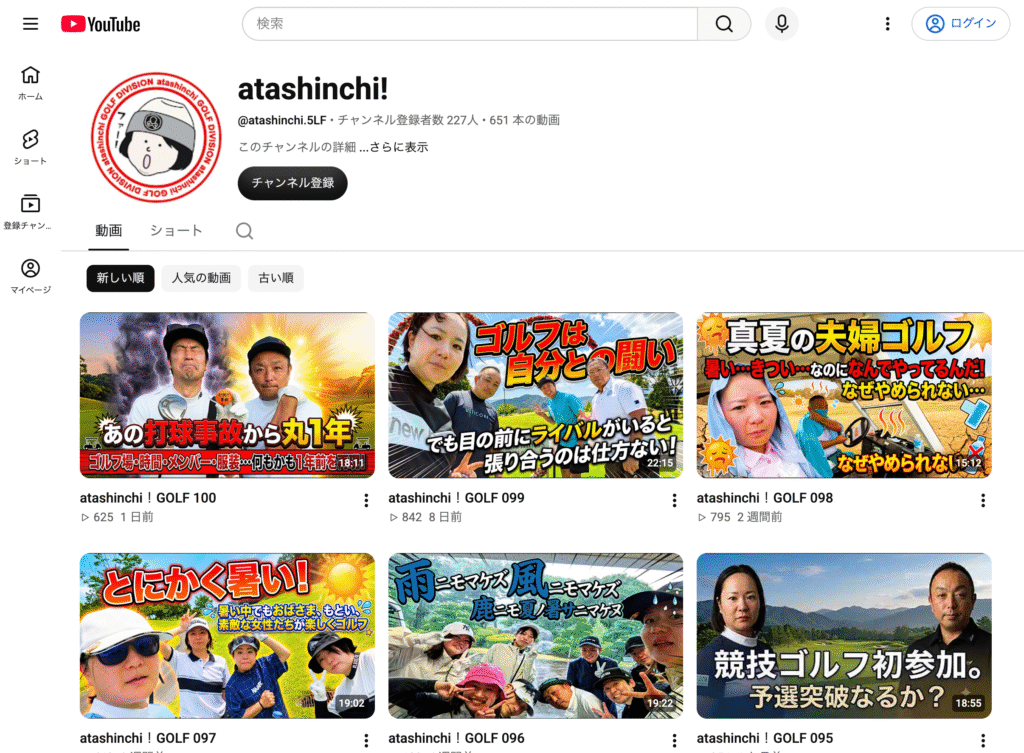
A declaration that "I was also stared at" has spread from the latest article
The article published on October 5 covered the persistent gaze from Mr. Ito towards the employee’s groin during an interview, the invitation to play golf alone during the interview, and the transfer or change of position following a refusal. The union is demanding that the company verify not only sexual behavior, but also personnel procedures such as interviews, disciplinary measures, and recommendations for termination of employment.
With multiple union members having filed similar claims following this article, the scope of the company’s investigation has expanded. In addition to responding to the individual involved in this case, it is necessary to investigate what was done at different times and in different workplaces, and whether the company had any opportunity to identify issues in the past.
Given the volume of inquiries and the number of specific claims of harm, we will handle them separately. Furthermore, the fact that multiple individuals have reported the same type of behavior indicates a clear need to broaden the scope of our investigation. We need to hear the experiences of each individual separately, and to cross-reference common behaviors, different circumstances, and responses to refusal or criticism.
What companies should address is the harm that resulted from the article being publicized, rather than the measures taken to address it. Before tackling the public relations firestorm, please check why the same content is being reported by multiple workers. Even if the way the article is presented changes, what happened at work will not change.
A former System Team union member from Fukuoka has come forward with a request for advice that led to his leaving the union five years ago.
This time, the union member who had newly submitted a specific request was a member working in the system team in Fukuoka. This member explained that despite being one year older than Mr. Ito, he was stared at in the groin.
According to the person’s own account, after pointing out that behavior, harassment at the company continued, and as a result, he was forced to resign five years later. This consultation goes beyond the story of feeling uncomfortable with the gaze directed at his body; it also covers the workplace treatment after refusing or pointing out the behavior, as well as the subsequent process leading to him losing his job.
What this complaint is forcing the company to confront is the question of what Mr. Ito did and the question of what happened within the company to the person who pointed it out. It is necessary to examine the person who engaged in the harassment, whether there was any instruction or approval, what the then-boss and HR personnel knew about it, and the actions taken by the company up to the time of the resignation, as a series of consecutive events.
Information about positions held at the time and related command orders are also subject to verification. Instead of simply applying the current title to the past, please clarify who was influenced by the person’s work and evaluation at the time and who had the position to stop harassment. Both the things the company knew and the things it failed to verify when it had the opportunity to learn about them are being questioned.
Even if a resignation form has been submitted, just looking at that document alone does not tell us why the person had to choose to quit. In response to requests for assistance regarding the treatment that made it difficult for them to continue working, we cannot simply explain it by citing only the outcome of the resignation procedure. We need to review the workplace that led to the resignation.
The union plans to organize the details of this employee’s complaint, including the course of the incident, the company’s response, and the impact of the resignation. In addition, the union will proceed with a specific claim. Since leaving the company five years ago, the person has not been removed from the company’s history. In conjunction with the current improvements, the union also calls for the company to address past incidents as well.
It's a double problem: sexual gaze harms the workplace and makes the person who pointed it out look worse.
Being constantly stared at in the sexual parts of the body involves a work environment and the dignity that should be maintained in the workplace. If you have to be wary of being watched by your partner every time you meet, even face-to-face interactions become opportunities to work without fear.
Harassment prevention materials from Asahikawa Medical UniversitySexual harassment can take the form of sexual behavior that includes “constantly staring at someone’s body.” What should be confirmed through the investigation is when, where, and to what extent the gaze is directed, and how the person responded to the rejection or discomfort.
This time, there is another problem with the consultation of Fukuoka union members: after pointing out that behavior, there was another instance of harassment at the workplace. We must examine this as a sequence of events where sexual behavior harms the working environment and that rejection or protest against it results in disadvantages at work, while separately confirming that these are linked.
Explanation from the Ministry of Health, Labor and WelfareHowever, there are cases of sexual harassment that harm the working environment through sexual behavior (environmental harassment) and those that suffer disadvantages as a result of responding to such behavior (compensatory harassment). What should be questioned here is not only whether the reporting of eye contact is accepted, but also whether the handling after the report works to silence the person or push them away from the workplace.
Article 11, paragraph 2 of the Equal Employment Opportunity Act stipulates that companies must cooperate in providing advice and confirming compliance with the law.
Employers shall not terminate employment or otherwise treat the employee adversely for the reason that the employee disclosed the facts when seeking consultation under the preceding paragraph or cooperated with the employer in responding to such consultation.
In addition to consulting the company, if there is a disadvantage to refusing the person who committed the act, you need to investigate the relationship between the refusal and the company’s response. Who did you point out what, how did that information get passed on within the company, and what decisions were made afterwards? Arrange the events in chronological order and review the records of instructions and approvals.
It becomes more difficult to file a claim after filing it than before filing it. If that has happened, the company’s consultation system is not functioning as a mechanism to restore confidence. The order in which people who have reported the problem are dismissed first and the verification of the problem is never completed forever is not acceptable to our union.
The standard is not age or gender, but whether they can work with peace of mind even after being rejected.
It is also necessary to listen to the explanation by the Fukuoka union member that he was one year older than Mr. Ito. This does not mean that the older party will not feel uncomfortable or that they will not be able to retaliate against the workplace disadvantages. The difference in age and the relationship that can affect work and treatment at the company are different matters.
The Ministry of Health, Labor and Welfare explains that both men and women can be perpetrators of sexual harassment and victims of it. There is no reason why a company would change the weight of a report simply because the person who reported the harassment is a man or the person is a woman. Anyone can show their rejection by having their own body treated as a sexual interest.
If you bring in the view that “since he’s older, I should be able to put up with it,” or “that’s the extent of it, I shouldn’t worry about it,” then before you ask the person about the facts they experienced, you’ll be creating a favorable image of the company for yourself. What you need is to find out how the person responded and what actually happened afterwards.
Also, even in a workplace where people are protected if they can clearly articulate their refusal, there are still difficulties. Some people may not be able to speak up immediately out of fear of the consequences after a rejection, due to differences in their position or for fear of the repercussions. Companies require that they listen to the situation, including the power relations at the time and the individual’s circumstances, rather than deciding on treatment based solely on the method and timing of reporting.
The fact that harassment has continued after we clearly pointed out this issue is also concerning for people currently working there. How people who have spoken out are treated is what people who are willing to speak up will see next time. What companies should be showing is not an attitude of demanding more courage from people who have spoken out, but an actual response that allows them to continue working even after they have spoken out.
Please do not let the matter involving Ms. Ito, who is in charge of personnel affairs, be handled solely by Ms. Ito herself.
The companyOfficial Board Member IntroductionIn that case, Ms. Ito is listed as a director and executive officer. In the latest article, she also described the details of how she was directly involved in interviewing employees and recommending their resignations. The fact that the person who filed a harassment complaint is also involved in personnel matters is important when considering the investigation system.
It is necessary to hear the person’s explanation. However, if the person explains the situation, someone under their direct command confirms it and reports it to the person, can the party who consulted be at ease to speak the truth? Not only should the department responsible for the investigation change its name, but it must also be confirmed who received instructions from whom and who approved the conclusion.
The union previously asked about the relationship between Mr. Ito, who was in charge of the “Chairman’s Office,” and his duties to protect the company’s interests. This time, too, regardless of whether he is in a position close to Mr. Watanabe, the union will continue to examine both the actions of Mr. Ito himself and the actions of the other officers and employees involved. Since officers who are close to the company’s core are more difficult to investigate, this is precisely the situation where the Audit & Supervisory Committee and the outside directors should step in.
JPX's principles for handling scandalsWe require a sufficient scope of investigation and an appropriate investigation system, and place emphasis on the independent officer’s self-purification function. In this case, we need to include not only sexual behavior but also personnel matters after reporting, past consultation processes, and the circumstances leading to resignation.
The company will select an independent person from those involved in the handling of the case at the time, such as Mr. Ito, and will require them to hear explanations from both parties individually, and to cross-reference the relevant records. While repeatedly explaining the same damage to the complainant, please do not conduct an investigation in which the answer of the officer is accepted with a single response. The title of director is not a priority pass ticket when receiving a complaint.
Please investigate the company's employee turnover and consultation system issues from the perspective of the employee's departure from the company five years ago.
This consultation is not only about the individual’s dignity and employment issues, but also about the company’s history of losing employees. If someone who worked in the systems team is claiming that they were forced to resign due to harassment after being pointed out by a sexual remark, it is necessary to examine why they were unable to secure a working environment that allowed them to continue working.
For companies that talk about sustainable growth, the foundation is that employees build up experience and knowledge and can confidently exert their strengths. If tolerating pain unrelated to work becomes a condition for employment, companies face the question of whether they are evaluating talent and retaining people or only leaving out those who do not object.
The company should review the number of past consultations, the results of those consultations, the changes, evaluations, and interviews following the consultations, and the circumstances of those who ended up leaving the company. Even if a consultation is not recorded in the records, it is necessary to check whether the consultation was known to the person in charge or was handled in a way that made it reassuring to the person concerned, and whether the details of the consultation that were communicated to management were officially recorded. A result of not being able to find the records and a conclusion that the company had no problems are not the same thing.
The fact that multiple complaints are now being submitted to the union is also a material for examining the company’s handling methods. Why are experiences being shared through articles in the union rather than internally? If there are circumstances that have prevented you from seeking advice in the past, improving the workplace that created those circumstances will continue to result in the same situation even if you increase the number of points of contact.
What companies should reduce is not the number of employees who file complaints, but the harm and retaliation. Even if the consultant leaves and the internal complaints are no longer heard, that cannot be counted as a result of workplace improvement. Even just one person being removed from the personnel list is a job that requires checking what was behind it—the job of managing people.
We will proceed with the specific requests separately and protect the current union members who are working.
Regarding the consultations received from former System Team union members in Fukuoka, the union plans to organize the progress and damages together with the individuals concerned and proceed with a separate specific claim. We will specify the subject matter and scope of the claim, including not only the pain caused by the acts but also the subsequent harassment, the course of events leading up to the resignation, and the impact on their lives and careers.
In that case, we will clarify the responsibilities of the person who committed the act, the company that received the complaint, the person who engaged in harassment, and the person who was involved in instructions or decisions. We will identify who caused what damage through what actions, confirm the applicable legal basis and the period for filing a claim, and proceed accordingly. We will not wait for a final decision on the company’s independent investigation and the person’s claim to recover their rights.
For union members currently working, we ask that they avoid unwanted contact and interviews, find ways to contact them with confidence, and request that their work be handled in a way that takes their wishes into account. Even if measures are necessary to reduce contact, please clearly state the conditions so that they do not result in wage or job-related disadvantages being imposed only on the person who consulted.
Equal Employment Act Q&A from the Ministry of Health, Labor and WelfareThe report also includes cases where people who have reported harassment were treated as troublemakers and had to resign. The ministry advises against adverse treatment, guidance from the labor bureau, and the use of dispute resolution assistance and mediation. For issues that cannot be resolved through internal company measures alone, external procedures can be used to address the problem.
Companies are required to preserve the documents related to attendance, duties, evaluations, interviews, transfers, and departures necessary for investigations and claims, and to respond appropriately to requests for the provision of documents related to the individual. Do not prioritize tasks that make excuses for not being related to the person because they are the person who left the workplace; the company’s actions that led to the person leaving the workplace can be verified even if the person has left the workplace.
Ito Miwa, Watanabe Makoto, the Board of Directors, and the Audit and Supervisory Committee
The Last Mile Labor Union received multiple complaints of harassment and consultations leading to the employee leaving the company five years ago. We request a response to the following matters: please separate the employee’s explanation from the company’s confirmation results, and provide a determination of fact, the person who made the determination, the records confirming the fact, and corrective measures.
- Mr. Ito, how would you respond to the reports that several union members have come forward to complain that they have been stared at from behind? Please distinguish between what has been confirmed by the person themselves and the facts that the company has independently confirmed.
- Regarding the complaint by a union member who worked at the Fukuoka system team that he was forced to resign five years ago due to harassment after pointing out the conduct, what scope will the company investigate? Will they confirm the extent of the command and instruction at the time, the authority to make personnel decisions, the existence of consultations, and the response leading to the resignation?
- When did the Watanabe Group, the management at the time, personnel officers, and the audit organization receive reports and comments regarding Mr. Ito’s actions? If they conducted reports, investigations, or guidance, please provide the details and results.
- Are the individuals who are subject to a victim notification or involved in personnel actions following the findings kept separate from the investigation policy and decision-making process? Please explain the reasons for appointing the person responsible for the investigation, the instructions system, access to documents, and the reporting channels.
- What changes have occurred in the person’s evaluation, responsibilities, interviews, and treatment before and after the refusal or consultation regarding sexual behavior? Will those who proposed or approved the changes also confirm the reasons for the changes and the supporting evidence?
- Will you investigate past consultations regarding similar actions and the circumstances of those who resigned after the consultation? Will you ensure a channel where employees, not just those who have resigned, can safely share their experiences?
- In order to prevent any adverse treatment of the respondents or survey participants, what measures are currently being taken? Will we respond to the respondents’ requests in a way that respects their wishes and health without forcing them to withdraw their requests or meet in person?
- If issues with the actions or company response are identified, who decides on measures against the officers, the restoration of the victim’s interests, handling of individual claims, and preventing recurrence? Please indicate that you plan to explain the progress of the investigation and improvement in a manner that respects personal information.
What the union is demanding is improvement from companies that don't fire people who have reported abuse.
The company should not reduce this issue to a matter of compatibility between Mr. Ito and one employee; instead, please handle it as a case involving multiple complaints and past resignations. We ask that the matter be handled in a way that allows the responsible parties to confirm the actions, prevent retaliation, recover damages, and improve the company’s oversight function.
- Establish an independent investigation system separate from that of Ito and those involved in personnel decisions, and individually verify the progress of each person regarding multiple reports and past resignations.
- Prevent any disadvantageous treatment based on the fact that you have consulted or cooperated with the investigation, and implement necessary contact avoidance and work-related consideration in a way that does not place a unilateral burden on the individual.
- Please maintain and preserve records of interviews, evaluations, work instructions, consultation processes, transfers and departures, and ensure that they are not lost due to expiration of retention periods or account suspensions.
- Based on the victim’s wishes, please address the restoration of any disadvantages and individual claims. Do not end with measures against the perpetrator; also examine the damage caused by the company’s actions.
- Please ensure that all parties involved, including officers, strictly adhere to the prevention of sexual misconduct, respect for requests for assistance, and the protection of those seeking assistance. In addition to the number of times the training is conducted, please also review the operational results to ensure that no adverse consequences arise after the consultation.
If you have had a similar experience, please organize the following information to the best of your ability: the act you experienced directly, the date and location, the details of the issue you pointed out, any changes in your work after that, and the consultation and the company’s response. There is no need to try to fill in any gaps in your memory or to match it with someone else’s experience. It is important to review the person’s experience with the contact information and personnel records that were left behind at the time.
In addition to consulting the union, you can also consult the Employment Environment and Equality Division (Office) of the prefectural labor bureau. The Ministry of Health, Labor and Welfare’s guidance also allows for anonymous consultations, and it is not required to reveal the name without the person’s consent to inform the company of the consultation details. Even those who find it difficult to voice their concerns internally can start the consultation from a route that suits their situation.
Turning the Atashino Kokan incident into a turning point for workers to regain their dignity
Behind the term "atashino Kokan incident," which is spreading among union members, there are multiple claims of victims and the specific experiences of people who were forced to leave their companies. The discussion is not about the popularity of Mr. Ito's YouTube activities, but about transforming the company they work for into a place where they can continue to work with peace of mind.
If you are passionate about improving your golf scores, I would like you to also identify the root cause of the problems that are repeatedly pointed out within the company and take action accordingly. Improving the appearance of videos and improving the workplace are separate tasks. As a director, I should first explain why multiple workers have filed complaints about similar incidents and even gone on to resign after being pointed out.
The union’s goal is sustainable growth and sound survival of the last mile, as well as the employment, livelihood, health, dignity, and well-being of workers. Because we value our company, those who have filed complaints should first leave the workplace, and the structure that persists without being examined for its problems must be changed.
We would like Ms. Ito Miwa to answer specific questions directed at her. To the Board of Directors and the Audit and Supervisory Committee, we ask that they stop the current damage and investigate the circumstances that led to her leaving the company five years ago. What the company should protect is not just the dignity of its officers.
The starting point for sustainable growth is that those who communicate that they dislike unpleasant things are able to avoid losing their jobs simply because of that. What should be expelled from a company is not the worker who has filed a complaint, but the harassment and the retaliation against those who pointed it out.