
When returning from parental leave, "It's good that you can get out of the house and go to work." Why does the personnel department at the president's office act for someone else?
A new complaint has been filed regarding Director Ito Miwa, who has been the subject of controversy over the atashino kokan incident. The union has received multiple reports of sexual harassment involving the director repeatedly staring into the crotch of the man she is interested in. This time, however, it is a complaint from a female employee who took parental leave after giving birth and returned to work.
When the woman returned to work, Mr. Ito directed a cold gaze toward her abdomen, as if gazing at her crotch, and said to her in a voice audible to her, "You can get to work easily, right?" After that, she began to experience severe nausea and dizziness upon returning to work, and soon thereafter resigned. It was reported that even when she consulted the company about her mental distress, the response she received was, "It's not the company's problem; it's your own problem."
Furthermore, from those close to Ito, it has also come to light some unacceptable remarks regarding the way information is conveyed to Chairman Watanabe Makoto. He is extremely loyal to his favorites and strict with those who do not agree with him; he even requests that information regarding entry into the company be passed through him. If this person is involved in personnel matters as the “director in charge of the chairman’s office,” then this issue will not be resolved by the actions of a single individual. It raises questions about how the rights of workers and the company’s decisions are driven by personal preferences.
The words thrown so that they could be heard to a woman who had returned from maternity leave to say hello
The woman who consulted with us this time worked as a full-time employee and took childcare leave after giving birth. After returning to the company, she said that when she met Mr. Ito at the office and greeted him, he looked at her stomach with a cold gaze.
According to the person’s own statement, after they parted ways, Mr. Ito turned toward another female employee who was walking along with him and said the following words, which could be heard by the other employees who were still at work:
You usually get off work early and can come in early, right?
To someone who has taken parental leave to continue working and returns after the leave ends, what do you call that “getting back on track”? Women did not enter the company without permission; they simply continued employment and used the system to return to their workplace. Where is the reason why they should be ashamed of returning to work?
Moreover, instead of explaining the necessary tasks to the person themselves, they approach the employee accompanying them, making it seem as if they are asking the person themselves. This indicates that a person with influence at work does not welcome the employee who has returned to work in front of other employees. This word not only hurts the person themselves, but also creates an atmosphere among those around them that suggests “how to treat that person.”
After that, the woman claims that she began to feel a strong sense of being looked at suspiciously by her employer, unlike before her maternity leave. When she went to work, she experienced severe nausea and dizziness, and soon after she resigned. The company requires that she examine all aspects of her case, including the interactions with others after that, her consultation, and the process leading up to her resignation, without being interrupted by a single word.
The union has already published reports of multiple complaints from men and of harassment following the act, leading to forced resignations. When combined with the woman’s recent report, it raises the question of whether the gaze directed at the body and the subsequent difficulty in being able to work in the workplace can be dismissed as separate incidents based on gender differences.
Even if you dislike parental leave or paid leave, the rights of employees cannot be taken away by the preferences of the directors.
From the surrounding environment, it has also been reported that Mr. Ito has an old-fashioned mindset and seems to dislike employees who take advantage of programs such as childcare leave and paid leave. However, whether someone likes or dislikes using these programs is a different matter; how to treat that person within the company is another matter. It is impossible to subordinate the rights of workers to the preferences of those with HR authority.
This complaint is about maternity harassment against women who have given birth and taken maternity leave, specifically as harassment based on the use of maternity leave. It should be investigated and corrected head-on. Just because a company has granted maternity leave does not mean the situation is resolved. If the person who took the leave is then excluded after returning to work, the system becomes a setup that only opens the door but leaves the harassment at the exit.
Article 25, paragraph 1 of the Childcare and Nursing Leave Act states as follows:
Employers must, in order to ensure that the employment environment of the employee is not harmed by their actions regarding the use of the systems or measures stipulated in the Labor Ministry regulations regarding childcare leave, nursing leave, or other measures related to the care of children or family members, when performing their duties at the workplace, take necessary measures to establish the necessary systems and other measures required for employment management.
What is required is not just writing the system into regulations; it is also necessary to protect the workplace environment of those who use the system and to respond appropriately to consultations. Article 2 of the same paragraph also prohibits any unfair treatment based on cooperation in consultations or fact-finding. Using an approach that says, “There is a system; the attitude of those around you after using it is a matter for the person concerned,” we cannot fulfill this responsibility.
Explanation from the Ministry of Health, Labor and WelfareHowever, it is stated that actions related to the use of parental leave or other leave can harm the working environment. Criticizing someone so that they can be heard when they return to work is a situation that the company should investigate as the root cause of the difficulty in continuing to work.
If there were any issues with staffing or the division of duties during the shutdown, it is the job of management and human resources to adjust them. Replacing that burden with the cold stares and snide remarks of women using the system is like charging the workers with the failure of management. Don’t blame the workers for the drop in productivity caused by the company’s inadequate system.
The term "traditional thinking" is not a reason for exemption either. It is not freedom to value old ideas; it is not freedom to make those ideas part of HR policies and make it difficult for people to use the systems guaranteed by the law. What needs to be updated is not the behavior of women who have returned to work, but the way those in power handle their work.
"It's your own problem." A response that pushes the pain caused by the company into the outside world.
The woman explained that even when she discussed the mental distress she felt at work, she was not given any assistance. Instead, she was told, "That's not the company's problem; it's your own problem." In other words, after confirming what she had reported regarding her behavior at work and her deteriorating health, why was she separated from it like that?
The Ministry of Health, Labor and Welfare explains that harassment is not an individual problem but a company problem. This time, the answer received by the woman from the company is almost the opposite of the original explanation. Was the company’s consultation desk not supposed to be a place where the company’s responsibility is reviewed, but rather a place where the responsibility is returned to the person?
What Mr. Ito said, what the person accompanying him heard, and how the treatment at the workplace changed afterwards. The specific verification that the company should perform when a woman consults is very concrete. If the company concluded the matter based on the person’s own problem without examining it, this is a very convenient procedure that completes the consultation process and the company’s liability at the same time.
This also coincides with the issue that our union is currently pursuing as a "work-related accident concealment" case; in that it replaces the company's involvement with the personal circumstances of the person involved. While an employee is claiming to have suffered harm to their health due to the actions of executives and human resources personnel, they do not specifically examine those actions and treat the person's physical condition as a private matter. As a result, the question of what actually happened at the company is pushed out of the proceedings.
In the union article on October 16, while explaining that the company would handle matters such as business owner certification once it receives the official application documents, it highlights that the reasons for determining that the illness is work-related have not been confirmed. The article also does not provide information about the investigation partner, confirmation records, or the decision-maker. The words “respond to the application” and the question “Have you investigated the cause of the damage?” must be answered separately.
Even with this particular case of a woman being denied responsibility by her company, there is no way the path to discussing her relationship with her workplace will be closed.The Ministry of Health, Labor and Welfare allows workers to claim workers’ compensation even if the company cannot provide proof of business ownership.It is important to organize the person’s symptoms and work-related history, and to ensure that the company does not make them give up using the necessary benefits.
With someone leaving, the number of consultations coming from that person to the company may decrease. However, this does not mean that problems that arose within the company will disappear. Do not confuse increasing the number of resignations with reducing complaints by improving the workplace environment.
The favorite pose on YouTube is the one chosen by the person. Is that pressure to quit if you don't conform?
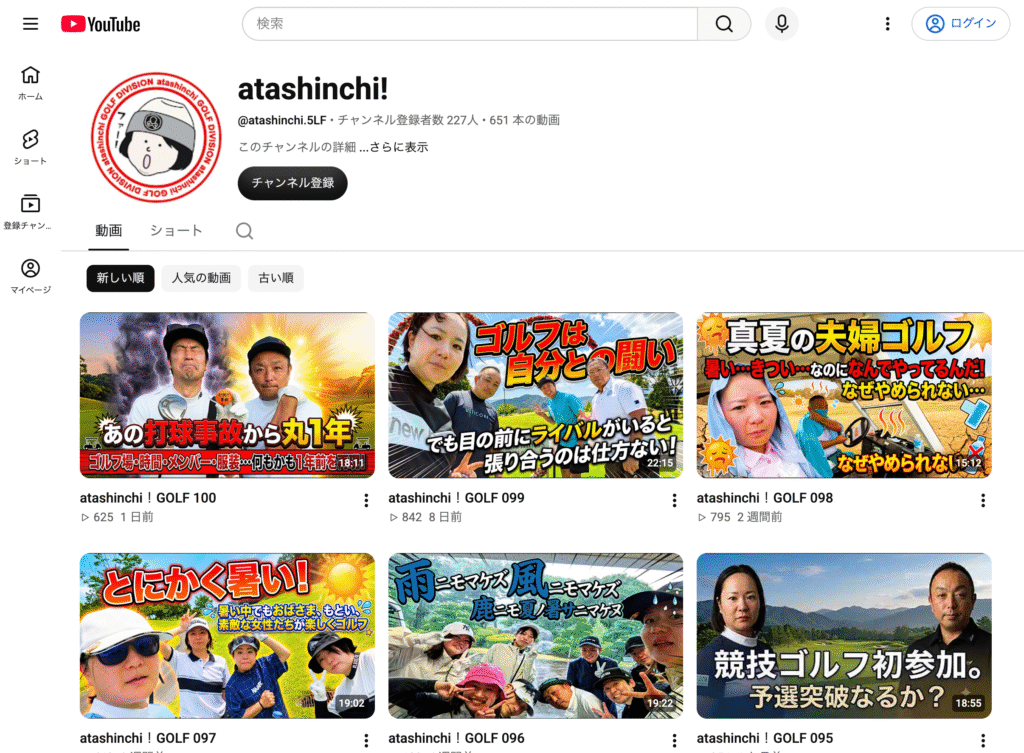
Regarding Ito, the duality of his personality also becomes a problem. According to the information received, he treats his favorites as close confidants, has them appear on YouTube for golf videos, and at the beginning of the videos, they agree on the usual gestures and poses. It is said that this intimacy is also used to strengthen the factions within the company.
On the other hand, employees who feel uncomfortable when wearing the nose clip, find it difficult to handle it, or feel that it is not under their control are subjected to various forms of harassment, including persistent close-up observations of the male genitals. This is another aspect of the situation that has been reported to our union.
The problem isn’t just the fact that they seem friendly in the video; it’s how that intimacy and the company’s evaluation, placement, and consultation processes are connected. If the two criteria are brought to HR, then employees will be judged not by their work results but by their ability to please the executives.
At the beginning of the video, you can all take the same pose together. But when the woman returns to the workplace, she receives a cold stare and the words, "You can get out of here early every day, right?" This discrepancy is what this case is about. If the smiles on people who are allowed to be on camera and the respect for those who work at the company are set up separately, then the only things that should be revealed are the happy moments.
Parental leave, paid leave, harassment consultation, and workers’ compensation claims are not membership benefits that can be used only by those who have been recognized as subordinates. They are not rights of workers; they are just the same words spoken by officials, the same poses taken, and the same relationships established. These are not the rights of workers.
The company asks you to investigate whether personal intimacy has interfered with evaluation and treatment. Golf scores and personnel evaluations are separate records. Your participation in video appearances and your eligibility to continue working at the company are separate matters. Please verify whether participating in a faction is not a practical condition for you to work at the company with peace of mind.
A statement from a close aide: "When you want to manipulate information, first ask me."
It makes one feel that Ito’s duality—the fact that he has in the past spoken to people about being approached by them—is not at all unlike that of President Watanabe, who has spoken to people about it in the past.The circumstances in which Mr. Ito himself had told his surroundings that he was being approached by Mr. Watanabe.We have already addressed this issue and asked how the personal closeness with the management affects the supervisors and human resources department.
What was conveyed to me by Mr. Ito’s close associates this time is a statement that further elaborates on that closeness in concrete terms. According to the information from the associates, Mr. Ito has often said the following:
That person will always believe what I say.
Because that person only believes the information they initially received, if you want to manipulate information, please first tell me.
This explanation is not about following up on a consultation properly; it is about "when you want to verify the facts," not "when you want to manipulate information." The chairman is talking about using the premise that you believe what he first heard as a basis for influencing the top management's perception of the company.
The significance of this statement lies not only in the fact that Mr. Ito boasted of being close to the chairman. It lies in the fact that the explanation from the person who made the complaint came before the complaints from employees, suggesting a structure where the first report becomes the basis for personnel decisions. Before hearing the person’s own words, it is necessary to examine whether a perception had been created that people who are difficult to deal with, those with problems, or those who complain about problems unrelated to the company were not treated with respect.
What was the woman’s complaint about this time, who reported it, and how did the company’s response of “it’s your own problem” lead to it? Was the complaint about Mr. Ito made to the chairman without going through Mr. Ito’s explanation? If we trace the actual reporting and approval process, we can see how the power conveyed to the close associates was used in the company’s decision-making.
If the conclusion is determined by the information initially entered, it is not a quick management decision; it is a system where the person who spoke first wins. While the person who files a complaint sorts out the date, time, and progress, the management side arrives at a conclusion in a single sentence. In companies where the distance between the chairman and the evidence is prioritized over the thickness of the evidence, a fair investigation cannot be conducted.
He explains that he is involved in personnel matters, has built up a loyal following, and will have the final say in appointing the next chairman. This situation is not surprising, even if some might assume that Ms. Ito is a "shadow ruler." If the company denies this, please provide a description of the title rather than simply stating that the victim reported the incident without the involvement of Ms. Ito. Please also indicate the actual path by which the report and original documents are delivered to the supervisory agency.
"Chairman's Office Director." The company's public documents also list a chairman's office where information is gathered.
In a written document addressed to the employees, Ito also proudly states, "I am the Director in charge of the Chairman's Office." This is a title that quite clearly conveys the closeness he has with the Chairman. When asked what role it is to be a Director in charge of the Chairman's Office, the answer is usually the name of the room where the Chairman is located. This combination of simplicity and complexity also applies to this issue.
The union has already published an article about this matter, asking what criteria will be used to determine when the personal wishes of the chairman and the company’s interests conflict. This question has become even more specific thanks to the information from the aide. Even if choosing the information to be delivered to the chairman is part of the responsibilities, does the right to eliminate any unfavorable statements include the power to do so?
The companyCorporate Governance Report dated November 27, 2025So, the path is shown where initiatives from each division and major subsidiaries enter the Chairman’s Office, are submitted to the Board of Directors from the Chairman’s Office, and after approval, are requested to be disclosed to the Management Planning Office. The Chairman’s Office is not depicted as a department solely responsible for managing visitors and appointments.
On the scale of the Last One Mile, by placing the chairman’s office so centrally in the company’s information flow and appointing a dedicated director to oversee it, one cannot help but notice its pompousness. However, this is not a story that ends with a laugh. There are issues that the company should investigate given the overlap between the information flow disclosed and the “information manipulation” stories told to its associates.
If the person in charge of the department handling the information that is submitted to the board of directors himself becomes a victim of a complaint, where does that information go? What is added between the person who submitted the complaint’s own text and the report summarizing the content, and what is omitted? When the evaluation that was previously communicated to the chairman and the person’s explanation diverge, who returns to the original document? Only by demonstrating this can we explain the information management system.
Even if you have a magnificent boardroom, if an employee who has returned from parental leave cannot work with peace of mind or receive any support, then what is lacking is not just the room or title. What is lacking is a system that takes the inconvenient facts from the field and incorporates them into management decisions. Before drawing an arrow to indicate disclosure, please ensure that the complaints do not dissipate along the way.
Is it possible to examine Mr. Ito under the consultation route that leads back to Mr. Ito, the one chosen by him?
In a statement on October 13, the union also raised the issue that Ito was involved in selecting the person to handle the reporting of sexual harassment against him and that a person directly subordinate to another reporting subject, Yoshii Iijima, was assigned to the position. Replacing the name of the sender and replacing the person who gives the instructions or approval are different matters.
Regarding this woman’s complaint, please investigate who received it, who reported it, and who determined that it was not a company problem. Depending on whether the person who handled the complaint made the decision on their own or followed instructions from above, the company’s responsibility for rectifying the problem will change. You should not end the investigation with just the name of the person who submitted the answer.
He told his associates that Mr. Ito could manipulate the information regarding Mr. Watanabe, and the discussion about Mr. Ito also returned to the channel of the Mr. Ito side. If there was such a cycle, it is not enough to simply explain that the chairman did not know. Questions are asked about what was not revealed, who did not inform him, and even the mechanism by which the chairman himself verified the information from another channel.
The union of prosecutors in "The Wolf Union" is:A report that Watanabe obtained information from the indictment and is using it to lobby other companies.We are asking them to take a look at this and verify the source of the information and its use. While the way information is used outside the company is being questioned, within the company, the issue is who chooses the information to be sent to the chairman. The company will be required to check whether the information is being used to verify facts or to coerce others.
JPX's principles for handling scandalsWe emphasize the necessary scope of investigation, an appropriate investigative structure, and the self-purification function of independent officers. In this case, it is necessary to verify not only the actions of Mr. Ito but also the handling of consultations, personnel decisions, and reporting to the chairman, independently from the parties involved.
The board of directors and the audit and supervisory committee are not institutions that confirm the explanations initially believed by the chairman. They review the original documents, listen to the person themselves and those around them individually, and verify any differences. Do not replace that work with the likes or dislikes of the board members or their trust in their associates. Creating a system where boasting about “only listening to what I say” is not acceptable is the governance that protects the company.
Ito Miwa, Watanabe Makoto, the Board of Directors, and the Audit and Supervisory Committee
The Last Mile Labor Union requests an answer regarding the female victim's complaint and the statements conveyed by an aide regarding the following matters: Please base your decision on what information and facts were verified, rather than who first heard the explanation.
- Mr. Ito stated that he observed the abdomen of a woman who had returned from parental leave. To the accompanying employee, he said, "You can get off work often, right?" How would you respond to this statement? Does the company conduct a fact-finding process individually with the woman herself and with those who heard the statement?
- Have you ever received any advice or criticism regarding Mr. Ito’s behavior towards employees who take childcare leave or use paid leave? Do you review the evaluation, placement, and surrounding interactions of employees before and after using the system, and the reasons for their resignation, for each individual subject?
- When a woman consulted about mental distress, who received the consultation, who reported it, and what was reviewed. Please clarify the decision-maker’s assessment and the grounds for it, as well as the process of instructions and approval leading to that response, stating whether it was “a problem with the company itself.”
- Regarding the circumstances that led to the woman leaving the company after experiencing nausea and dizziness upon her return to work, how did the company learn about it and what action did it take? Did it consider the relationship between workplace behavior, work-related accommodations, and cooperation in applying for necessary benefits?
- Will you examine whether there are any differences in the evaluation, placement, and consultation procedures for employees who are close to Ito or for employees who do not conform to his expectations? Please check whether the relationship in personal activities such as golf has not been brought into personnel decisions.
- Regarding the information that Mr. Ito has told his aides about Mr. Watanabe, how would you respond? Will you verify that there is no discrepancy between the original text of the employee report, the summary, the explanation to the chairman, and the approval?
- What are the official duties of the "Director in Charge of the Chairman's Office," and what authority does he have regarding personnel matters, consultation, and reporting to the Board of Directors? If Mr. Ito himself is subject to reporting requirements, please explain the route by which the original materials are delivered to the Audit and Supervisory Committee without going through him.
- Will you review the multiple sexual harassment complaints, those filed after returning from parental leave this time, and the current workers’ compensation claims in an independent manner? Please include not only the personnel responsible for handling the complaints but also those who made the appointments, gave instructions, or approved responses.
- Depending on the results of the fact-finding, who will decide on apologies to the victims, the restoration of the disadvantages resulting from the termination of employment, the handling of damages, the review of personnel authority, and the verification of responsibility as a director? Please also indicate measures to prevent retaliation against the consultant and colleagues.
Instead of increasing the number of retirees to eliminate complaints, change them into companies where they can continue working.
When considering a company’s sustainable growth, we must look not only at how many people have taken parental leave, but also at whether those who have returned can continue working with peace of mind. If someone who took advantage of the system is driven into retirement and the company handles the circumstances as an individual’s problem, the company not only loses experience and ability, but also loses the trust of those who might try to use the system in the future.
Similarly, if people who refuse harassment, seek advice, or raise questions about the company’s explanation leave, the workplace will see fewer disagreements. However, that is not proof that the problem has been solved. Companies should not evaluate the disappearance of people who can express their opinions as management’s leadership.
- Please conduct an independent investigation of this woman’s current complaint and the existing complaints filed by the victim, preserving the details of each individual case. Please continuously review the actions taken during her return to work, the responses from those around her, the handling of counseling, and the termination of her employment, and do not make conclusions based solely on the actions of the officers and managers involved.
- Please inspect the selection of the person responsible for consultation by the person subject to reporting, the processing of the reporting content, and the instructions and approval of the response, and make any necessary revisions. While conducting the investigation, please protect the health and safety of the person subject to reporting and implement measures to avoid contact and work-related considerations in a way that does not place a unilateral disadvantage on the person subject to reporting.
- Please preserve records of reinstatement, evaluation, placement, interviews, retirement, and consultation sessions, as well as reports and decisions made through the Chairman's Office. Maintain the ability to compare the original text with summaries, initial explanations, and subsequent revisions, and prevent efforts to gather testimony.
- If problems are identified with the company or the actions of its officers, please proceed with apologies, restitution of any disadvantages, and compensation for damages based on the individual’s wishes. We also accept consultations from people who have left the company; please do not deny the company’s responsibility by refusing to provide benefits or necessary documents.
- Please ensure that your policies do not disadvantage employees who take parental leave, have paid leave, or file a harassment claim. Do not end your efforts with training for executives; continue to monitor the handling of complaints and personnel decisions after the training, and verify that improvements are actually being implemented.
If you have had similar experiences, please organize the time you used the system, the behaviors you experienced after returning to work, the responses from those around you, the changes in your health, and the details of the discussions you had with the company. It is important to separate what you experienced directly from what you heard from others. It is not necessary to try to fill in the gaps in your memory or to match the explanations of others.
For those who have retired, please record not only the reasons stated in the retirement notice, but also what led to the situation. Depending on the individual’s intention and the specific circumstances, you can review workplace responses, claim for damages or other compensation, and procedures such as workers’ compensation insurance, while checking the respective requirements and deadlines.
If you cannot get support from your company,Consultation center for the "Arigai Kaizen Support Team" of the Ministry of Health, Labor and WelfareYou can check with the Employment Environment and Equality Division (Office) of the prefectural labor bureau. Our union will also clarify what happened within the company and demand that measures be taken so that workers are not further pushed into a situation where they are forced to claim their rights.
"Controlling," "Viewing," and "Interfering." To return to the work of a director, our union urges you to "recommend."
Following complaints of sexual harassment from men, it has become clear that the handling of complaints from women who have returned to work after parental leave—such as declining to consider their problems as their own—and those of women who have deteriorated physically and quit their jobs—by dismissing them as personal matters—are intertwined. Moreover, information manipulation by the chairman, as told to a close aide, and the authority of the chairman’s office, which is also mentioned in the published materials, all combine to create a structure that may or may not be favorable to Mr. Ito. Should the structure be left as it is, it could affect whether the company is able to protect its employees?
What women who have returned to work need is an environment where they can continue to work without the stares that would shame them, or the unpleasantness that would be heard. This is not an environment that allows them to remain in their jobs; rather, the fact that they are employees with a contract with the company is the basis for this environment.
With someone like Ito Miwa, is it really the job to “manage” the chairman’s office? Still, with new problems being pointed out—so much so that it’s hard to call it a “rampant series of wrongdoing”—is it really the job to just “admire” Watanabe, the “bird of strange appearance”?
Or is it the job of a woman to continue “interfering” in the private lives of the men she likes and to intervene in the reinstatement of women who use the system, even to the point of taking personal interest in their jobs? The chairman listens attentively to information, but he does not listen to the voices of employees who are calling for redress. Such a role should not be expected of a company’s board of directors.
The primary function of labor unions is to improve the working environment for workers and protect employment, livelihood, health, dignity, and welfare. Regarding Ms. Ito Miwa, who has been pointed out for actions that directly harm that working environment, our union will continue to strongly “advocate” for her to become the kind of director who should fulfill her duties as a representative of the board of directors. This is not a recommendation to expel employees from the company; it is a recommendation to remove harassment and personalization from the company.